Mini-splits have become one of the most popular ways to heat and cool homes in New Jersey and Pennsylvania. We’ve seen homeowners install them everywhere from older homes without ductwork to room additions, finished basements, home offices, and spaces where central air simply isn’t practical.
But before scheduling a new system, homeowners often ask the same question: what size mini-split do I need?
The answer matters more than many people realize. A mini-split system that’s too small may struggle to keep your home comfortable. One that’s too large can cycle on and off too frequently, reducing efficiency and potentially shortening the system’s lifespan.
Key Takeaways
-
Mini-split sizing is based on BTUs, not just room dimensions.
-
Factors like insulation, ceiling height, windows, and sun exposure affect sizing.
-
An oversized system can be just as problematic as an undersized one.
-
Multi-zone systems require careful planning for each area of the home.
-
Professional mini-split installation helps ensure the system is sized correctly for long-term comfort and efficiency.
Why Mini-Split Sizing Matters
Many homeowners assume bigger is better when it comes to cooling equipment.
In most cases, the right answer isn’t the largest unit available. Proper sizing helps ensure efficient cooling, reliable heating, good humidity control, and long-term energy efficiency.
A correctly sized ductless air conditioner will:
-
Maintain consistent temperatures
-
Improve energy efficiency
-
Reduce operating costs
-
Better control humidity
-
Extend equipment lifespan
-
Improve overall comfort
An incorrectly sized system often struggles to deliver these benefits.
Too small, and the unit may run continuously while still failing to maintain the desired temperature. Too large, and it may short-cycle, creating uneven comfort and unnecessary wear on components.
Understanding BTUs and Mini-Split Capacity
Most mini-split systems are sized using BTUs, or British Thermal Units. BTUs measure a system’s cooling capacity and help determine how much heating and cooling a particular space requires.
BTUs measure how much heating or cooling capacity a system can provide in one hour.
Common mini-split sizes include:
|
BTUs |
Typical Coverage Area |
|---|---|
|
6,000 BTU |
Up to 250 sq. ft. |
|
9,000 BTU |
250-400 sq. ft. |
|
12,000 BTU |
400-550 sq. ft. |
|
18,000 BTU |
550-1,000 sq. ft. |
|
24,000 BTU |
1,000-1,500 sq. ft. |
|
36,000 BTU |
1,500+ sq. ft. |
These ranges provide a useful starting point, but square footage alone doesn’t tell the whole story.
Mini-Split Components Matter Too
A ductless-mini split relies on several main components working together. Most systems include an indoor unit, an outdoor unit, refrigerant line connections, and controls that regulate temperature throughout the space.
For larger homes, multiple indoor units may connect to one outdoor unit or a single outdoor unit may support several zones depending on the manufacturer and model selected.
Factors That Affect Mini-Split Sizing
Professional sizing calculations consider far more than room dimensions.
Insulation Quality
A well-insulated home retains conditioned air more effectively than one with poor insulation.
We’ve evaluated homes throughout New Jersey and Eastern Pennsylvania where two rooms with identical square footage required different sizing simply because insulation levels and window exposure varied dramatically.
Ceiling Height
A room with vaulted ceilings contains much more air volume than a room with standard eight-foot ceilings.
The larger the air volume, the more capacity may be required.
Window Size and Sun Exposure
Large windows bring in natural light, but they also bring in heat.
South-facing rooms, sunrooms, and spaces with large glass areas often require additional cooling capacity compared to similarly sized rooms with less sun exposure.
Occupancy and Room Usage
A bedroom, home office, and kitchen of the same size can have very different cooling demands.
Cooking appliances, electronics, and the number of occupants all affect how much heat is generated inside a space.
Climate Conditions
New Jersey and Pennsylvania experience humid summers that place additional demands on cooling equipment.
Proper sizing helps ensure your system can manage both temperature and humidity effectively.
What About Multi-Zone Mini Split Systems?
Many homeowners choose a multi-zone mini split system to provide targeted comfort throughout several areas of the home. Unlike central HVAC systems that distribute conditioned air through ductwork, mini-splits offer independent control of individual rooms. This flexibility is one reason homeowners increasingly choose them over traditional central systems.
In these setups, one outdoor unit connects to multiple indoor units.
Each indoor unit is sized based on the specific room it serves.
For example:
-
A master bedroom may require 9,000 BTUs
-
A large family room may need 18,000 BTUs
-
A home office may only require 6,000 BTUs
The combined load helps determine the size of the outdoor equipment.
This is one reason professional design is so important during ductless mini split installation.
Signs a Mini-Split Is the Wrong Size
Improper sizing isn’t always obvious at first.
Over time, however, certain warning signs begin to appear.
Signs Your System May Be Too Small
-
Runs constantly
-
Struggles during hot weather
-
Uneven temperatures
-
Higher energy bills
-
Difficulty reaching thermostat settings
Signs Your System May Be Too Large
-
Frequent on-and-off cycling
-
Excess humidity indoors
-
Uneven cooling
-
Temperature swings
-
Reduced efficiency
Both situations can affect comfort and operating costs.
Why Professional Sizing Is Worth It
Online calculators can provide a rough starting point, but professional installation begins with understanding the home itself. Our team regularly evaluates factors that online sizing charts simply can’t measure accurately.
At Binsky Home Service, our team evaluates factors such as:
-
Square footage
-
Insulation levels
-
Window placement
-
Ceiling height
-
Home layout
-
Existing heating and cooling needs
-
Indoor air quality concerns
-
Future expansion plans
This allows us to recommend the right mini-split system for long-term comfort and performance.
It’s part of our commitment to helping homeowners make informed decisions rather than relying on guesswork.
What Happens During Mini-Split Installation?
A professional ductless mini-split installation typically begins with an in-home assessment and system design. Proper planning helps avoid wasting energy, improves efficiency, and ensures the system delivers consistent comfort throughout the home.
Once sizing is finalized, technicians install:
-
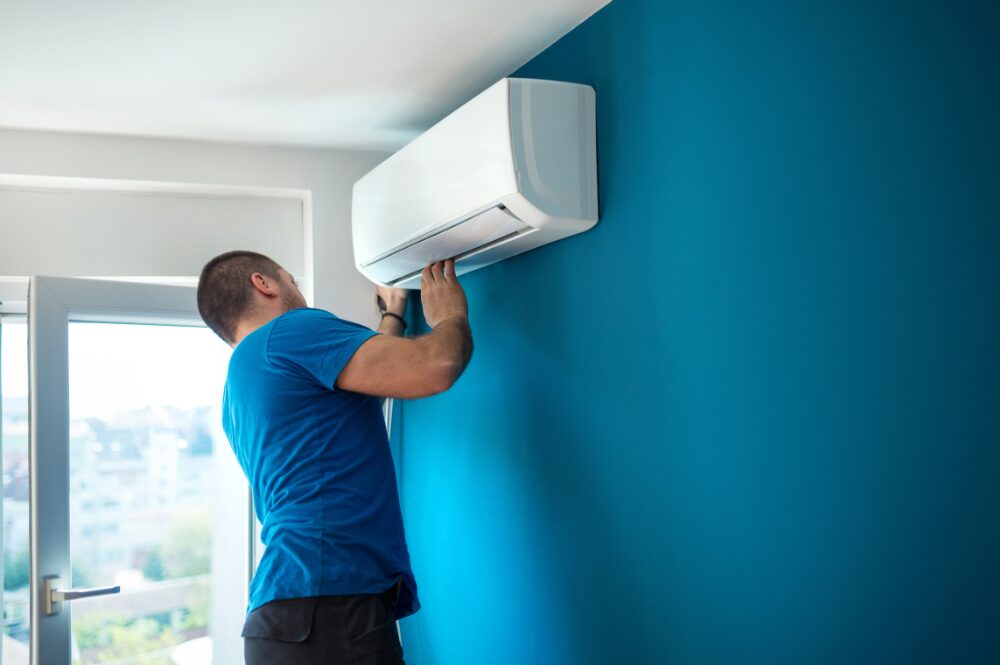
Wall mounted indoor air handlers
-
Outdoor condenser equipment
-
Refrigerant line connections
-
Electrical components
-
Condensate drainage systems
After installation, the system is tested to ensure proper operation and performance.
Most residential installations can be completed in a day, depending on the number of indoor units and complexity of the project.
Can You Size and Install a Mini-Split Yourself?
Many manufacturers now offer DIY models, but sizing and installation mistakes can be costly.
Improper refrigerant line installation, poor equipment placement, refrigerant leaks, or selecting the wrong unit size can all affect performance and system lifespan. Professional installation helps ensure the equipment is installed correctly and supported by manufacturer warranties.
In our experience, homeowners are usually happiest when they invest in proper sizing upfront rather than trying to correct comfort problems later.
Getting the Right Size the First Time Matters
Choosing the right size mini-split isn’t just about comfort today. It affects efficiency, energy use, operating costs, indoor air quality, and equipment lifespan for years to come. A properly sized system can provide reliable heating and cooling while helping homeowners avoid unnecessary energy losses.
If you’re considering a ductless mini-split installation in New Jersey or Eastern Pennsylvania, Binsky Home Service can help. Our team will evaluate your home, recommend the right solution, and ensure your new system delivers dependable comfort season after season. Contact us today to schedule your consultation.
Frequently Asked Questions
How do I determine what size mini-split do I need?
The best way is through a professional load calculation. Factors like square footage, insulation, ceiling height, windows, and occupancy all affect the size required for your home.
Can a mini-split system be too large?
Yes. An oversized system may short-cycle, leading to uneven temperatures, reduced humidity control, and lower overall efficiency.
How long does mini-split installation take?
Most residential mini-split installation projects can be completed within a day, though larger multi-zone systems may require additional time.
Is ductless mini-split installation good for older homes?
Absolutely. Ductless mini-split installation is often an excellent option for older homes because it doesn’t require extensive ductwork and can provide targeted comfort in specific rooms.
Is a ductless air conditioner more efficient than central air?
In many situations, yes. Because a ductless air conditioner delivers conditioned air directly into living spaces without duct losses, it can often operate more efficiently than traditional central air systems.