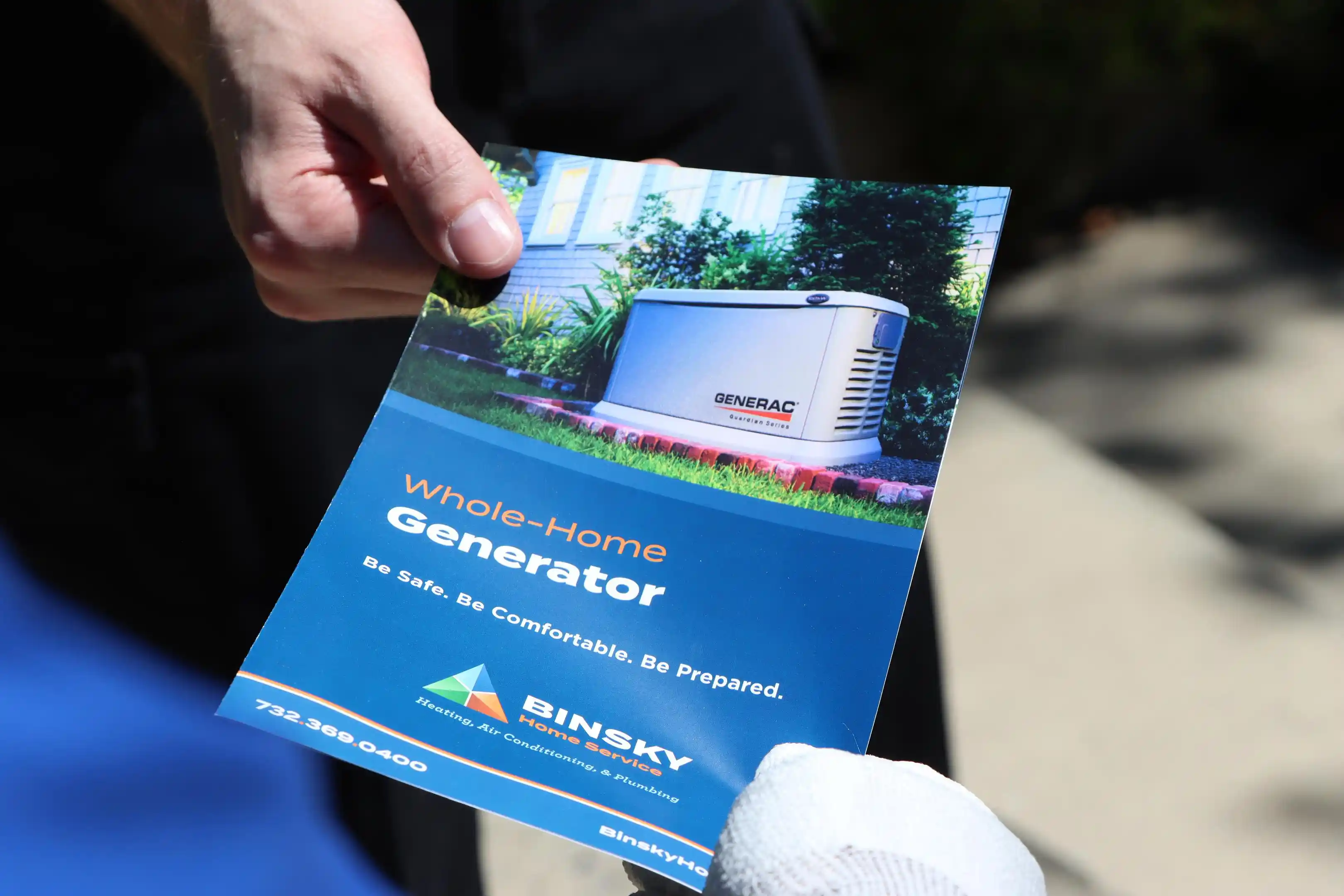
The lights flicker, the sump pump goes quiet, and the furnace stops mid-cycle. Anyone who lived through Sandy, Ida, or a February nor’easter in New Jersey knows how quickly a power outage turns into a home problem. That’s usually the moment many homeowners start asking what standby generators actually cost.
The honest answer is that whole house generator cost will vary based on your home, your fuel type, and how much of your house you want running during power outages. Most New Jersey homeowners invest somewhere between $8,000 and $16,000 for a fully installed system, with larger homes and more complex projects landing higher. Below, our generator team breaks down where that money goes, what pushes the price up or down, and how to build a budget that makes sense for your household.
Key Takeaways
- Most NJ homeowners can expect a whole house generator cost installed of roughly $8,000 to $16,000. Larger or more complex projects can reach $20,000 or more.
- The generator unit usually accounts for about $4,000 to $7,500 of the total. The transfer switch, electrical work, fuel hookup, and permits make up the rest.
- Generator size is the biggest cost driver, and a proper load calculation keeps you from overpaying or undersizing.
- Homes with natural gas service often pay less than homes that need a propane tank installed.
- Annual maintenance keeps your generator ready for the next storm and helps protect your warranty.
What Goes Into the Cost of a Whole House Generator?
When you receive a quote, you’re paying for a complete backup power system. Here’s what a professional installation typically includes.
The generator itself. Air-cooled home standby units in the 10 kW to 26 kW range generally cost between $4,000 and $7,500 before installation. Liquid-cooled models built for very large homes cost considerably more. Brand, wattage, and features like Wi-Fi monitoring also affect pricing.
Automatic transfer switch. This device senses an outage, safely disconnects your home from the utility line, and starts the generator within seconds. That automatic operation means your home stays protected even when you’re away. Many units come packaged with a 200-amp switch, while homes with larger electrical service may need a different setup.
Mounting pad. Your generator sits on a level concrete or composite pad outdoors, placed to meet manufacturer clearances and local code.
Electrical work. A licensed electrician connects the generator and transfer switch to your home’s electrical system. This is the part of the job where experience matters most for safety.
Fuel connection. Most home standby generators in New Jersey run on natural gas or propane. Running a fuel line to the unit or setting a propane tank is a significant part of the overall expense. Diesel units exist, but they’re rarely used for residential standby generators here.
Permits and inspections. New Jersey towns require permits for standby generator installations, usually covering electrical work, fuel gas, and sometimes zoning. Fees vary by municipality, and your installer should handle code compliance and scheduling inspections for you.
Startup and walkthrough. Your installer tests the full system, confirms the transfer switch operates properly, and shows you how everything works.
Whole Home Generator Cost by Size
Generator size is measured in kilowatts (kW), and it has the biggest influence on your whole home generator cost. These general ranges give NJ homeowners a starting point for planning.
Many New Jersey homes in the 2,000 to 3,000 square foot range end up with a 20 to 24 kW generator, but square footage alone doesn’t tell the whole story. Electric water heaters, well pumps, electric ranges, EV chargers, and multiple air conditioning systems all add demand. That’s why consulting a professional who can assess your home’s actual wattage needs is the best way to choose the right generator.
What Raises or Lowers Home Generator Cost in NJ?
Two homes on the same street can receive very different quotes. These factors usually explain the difference.
Your fuel source. If your home already has natural gas, the installer can typically tie into your existing service. Some homes need a larger gas meter, which the utility installs and which can add time to the project. Homes without natural gas will need a propane tank, and a new tank can add roughly $1,000 to $2,600 or more, plus the cost of filling it.
Distance to the meter and panel. The farther the generator sits from your gas meter and electrical panel, the more pipe, wire, and labor the job requires.
Electrical panel condition. Older or overloaded panels may need an upgrade before a generator can be connected safely. If your panel is outdated, it’s worth addressing for your home’s safety anyway.
Whole-home or essential-circuit coverage. Backing up every circuit costs more than covering the essentials. Load management modules can help a mid-size generator run central air and large appliances without jumping to the next size up.
Site conditions. Sloped yards, tight side yards, landscaping, and soil conditions can all affect pad placement and labor time.
Local requirements. Every NJ municipality handles permits a little differently, and some have setback or noise rules that determine which locations on your property are allowed.
Ongoing Maintenance and Long-Term Costs
The cost of owning a standby generator continues after installation, though ongoing expenses are usually modest.
Annual maintenance. Your generator needs regular care, including oil changes, new filters, spark plug checks, battery testing, and a transfer switch inspection. Most manufacturers recommend yearly service, and staying on schedule helps protect your warranty.
Fuel during outages. A natural gas generator only draws fuel while it runs. Propane owners should check tank levels before storm season and winter.
Weekly exercise cycles. Most units run a short self-test each week. It uses a small amount of fuel and keeps the engine ready to start.
Battery replacement. The starting battery typically needs to be replaced every few years.
Ask your Binsky technician about adding generator service to a home maintenance plan in Central NJ so your system gets checked on a regular schedule.
Is a Whole House Generator Worth the Investment?
For most homeowners, the answer comes down to what an outage actually costs your household. Consider what’s at stake when the power stays off for a day or more:
- A flooded basement after the sump pump stops
- Frozen pipes during a winter storm
- A full refrigerator and freezer of spoiled food
- Medical equipment that needs constant power
- Lost workdays without internet, lights, or a way to charge devices
- No heat or air conditioning for kids, older family members, or pets
A whole house generator does carry higher upfront costs than a portable unit, which needs manual setup, refueling, and extension cords and rarely runs central heating or air. Over the long term, avoiding even one flooded finished basement or a week of spoiled groceries can help offset that expense. In neighborhoods that lose power often, the added reliability of a Generac home standby generator for winter preparedness can also bring real value when it’s time to sell.
How to Budget for Your Generator Project
These budgeting tips make the installation process smoother and help you compare quotes with confidence.
- List what you need running during an outage. Start with the essentials, then decide whether you want full-home comfort.
- Confirm your fuel source. Knowing whether you have natural gas service gives you a better idea of your likely price range.
- Schedule an in-home assessment. A load calculation is the most reliable way to determine generator size and ensure you get the right generator for your home.
- Ask what each quote includes. A complete quote should cover the unit, transfer switch, pad, electrical work, gas connection, permits, and startup. A lower number that leaves out permits or the gas line will cost more by the end of the project.
- Start before the weather turns. Permits, inspections, and utility meter upgrades take time. With nor’easter season approaching, getting your project on the calendar now gives you the best chance of being ready.
- Ask about current promotions and financing options. Spreading out the cost can make a generator easier to fit into your budget.
Why NJ Homeowners Call Binsky for Generator Installation
Binsky Home Service installs and maintains Generac whole-home generators in Somerset and throughout New Jersey for homeowners throughout New Jersey and Eastern Pennsylvania. Because our team handles electrical, plumbing, and HVAC work, we can manage your generator project in-house, including the electrical connection, the gas line, and making sure your backup power supports your heating and cooling the way you need it to.
When you work with Binsky, our technicians will:
- Walk through your home and complete a proper load calculation
- Recommend the right generator size for your needs and budget, with honest guidance
- Handle permits and inspections with your town
- Install, test, and walk you through your new system
- Keep your generator maintained and ready for years to come
Homeowners across the region trust us for fast response, dependable workmanship, and straight answers. When the power goes out, Binsky’s your guy.
Whole House Generator Cost FAQs
How much does a whole house generator cost in NJ?
Most New Jersey homeowners spend between $8,000 and $16,000 for a fully installed system. Large homes, liquid-cooled units, and projects that need a propane tank or panel upgrade can cost more.
What size generator do I need for a 2,500 square foot home?
Many homes this size use a 20 to 24 kW generator, but your appliances and heating and cooling equipment matter more than square footage. A load calculation gives you the right answer for your home.
Is natural gas or propane cheaper for a standby generator?
Natural gas is usually less expensive to install if your home already has service. Propane works well for homes without a gas line, though the tank adds to your upfront cost.
Do I need a permit to install a generator in New Jersey?
Yes. NJ towns require permits and inspections for standby generator installations. A professional installer like Binsky handles the paperwork for you.
How long does the installation process take?
The installation itself often takes one to two days. The full timeline, including permits, inspections, and any utility meter upgrade, can stretch to several weeks, so it pays to plan ahead.
How long does a whole house generator last?
With regular maintenance, many home standby generators last 20 years or more.
Get an Accurate Generator Estimate From Binsky
The most reliable way to know your whole house generator cost is an in-home estimate built around your home, your fuel source, and the systems you want protected. Our generator specialists will explain every line of your quote, recommend the right size, and handle the installation so your home keeps running through the next storm.
Binsky’s your guy.